
Between the imposter & the overconfident
And the uncomfortable space in between.

“Don’t you think what they were doing is inefficient?” - one of my senior colleagues asked me, after a meeting. It was my first job.
“Oh yeah! I don’t think their approach is gonna work.” - I replied.
“Then, why didn’t you say anything?”
“I didn’t think it was my place to point that out, and they didn’t seem to be taking any feedbacks.”
He nodded and walked away. I am not sure if he was impressed or just done with the conversation. I didn’t ask.
This was a pattern in my early days. Cross-departmental meetings, internal reviews, and even casual conversations where someone said something obviously wrong. I would notice. I would say nothing. I would walk out and process it alone.
I would cross-check reports five times before sending. (We didn’t have GenAI to do that.) No typos. Everything is in place. Not because anyone asked me to, but because I was quietly terrified of being ‘found out’.
There is a formal name for this, as it turns out. You guessed it right.
During COVID, I used to go out for an afternoon walk/run in a nearby park after 4. One day, I went out. Just when I reached the park and was about to start the run on Strava, I saw my manager had messaged: “We can connect whenever you are free”. I panicked a bit, even though there was absolutely no reason. My manager was quite chill in these cases. I ran my fastest 1k (~5:50 min). I was panting like a thirsty dog. And came back home in 15 mins.
This imposter syndrome also had a positive side. It made me focus on work a lot more. I would push the limits regularly. It was tiring. But it was effective. That low-grade anxiety made me careful. It made me listen. I learned a lot because I assumed I didn't know enough (which should be the default mode anyway).
Then, something quietly started changing. The change wasn’t like a sudden cloudburst, but rather like a slow sunrise.
As my career progressed, I started interacting with different people. I sat through many meetings, many inefficient ones, and my point of view about myself changed. There have been so many meetings where I would hear a director or VP say something ridiculous and leave the room thinking, “Man! These guys have no idea at all.”
I started doing the math. And the math was oddly comforting.
If they have a job, I thought, I will definitely have a job1. If they are senior, I can be senior. If that passes review, mine will certainly pass review. It is a reasonable inference on paper. In practice, it makes you sloppy.
These interactions changed my perspective. From being an imposter, I started becoming overconfident. There have been assignments where, instead of being super focused, I started coasting. Chilling - if you will. And that resulted in subpar outputs.
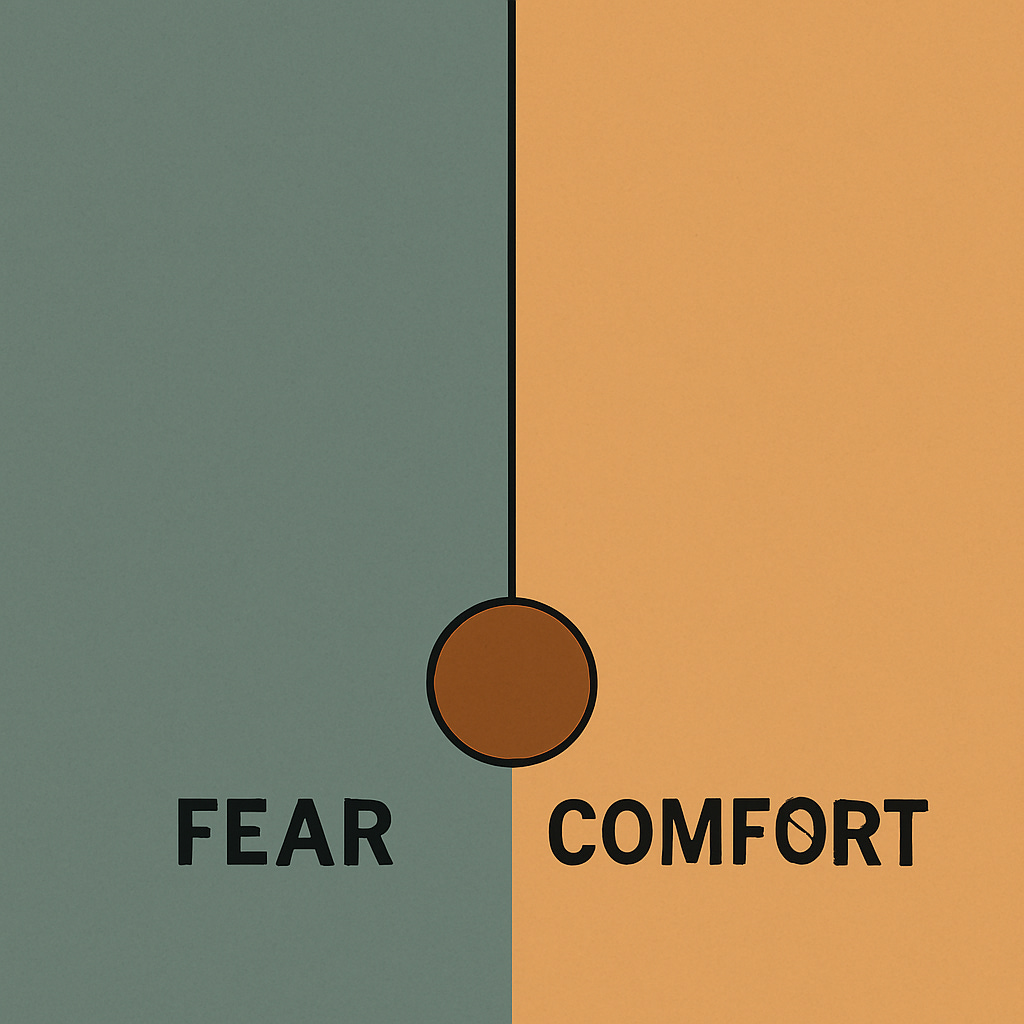
The problem with imposter syndrome is that you let your fear do the thinking. You catastrophise, you shrink, you over-prepare for things that didn't need that much preparation. But the problem with its opposite, being overconfident, is that you let your comfort do the thinking. You stop treating the problem in front of you as a problem. You treat it as a formality.
What I am trying to do now is simpler, and harder. Treat each assignment like it deserves attention. Not because I am scared, not because it is easy, but because I am getting paid to do it well and it is in front of me right now. That is a sufficient reason.
I don't know if I have solved this. The pendulum still swings, but less often. And less drastically. I still walk into some rooms feeling like a fraud and some rooms feeling like I'm doing everyone a favour by showing up. Neither is accurate. Both are, in their own way, a distraction.
The problem does not care about my relationship with my own competence. Which is, honestly, a relief.
To be fair, big organisations are genuinely hard to navigate. At some point, seniority and technical sharpness start moving in opposite directions. It is nobody's fault in particular. But it is also not a great benchmark to measure yourself against.
Ordinary thoughts, shared with hope. Pass it along if it resonated.